


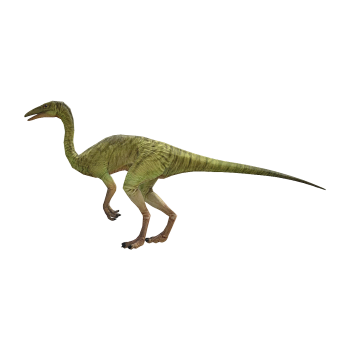
Maxillosaurus (3D animated model)
Mejanosaurus is a very small theropod dinosaur whose fossils were found in Europe and lived in the Late Jurassic. Until 1990, Maxillosaurus was the smallest theropod dinosaur. According to the current knowledge system, the class of mejosaurus to which mejosaurus belongs is a relatively primitive one in the class of virtual bones, and their kinship is far less close than that of Velociraptor, Deinonychus and birds. But for a long time in the past, mejosaurus was considered a close relative of Archaeopteryx, and led to the theory of the origin of avian dinosaurs.

3D Animation Model of Megalosaurus
It is a small theropod dinosaur known for its unique jaw and slender hind limbs. The mandible does not have an external mandibular window, and the neural spines of the posterior dorsal vertebrae are fan-shaped and have hook shaped protrusions for attaching ligaments. The first metacarpal bone is short and thick, the cervical spine is retroverted, and the femur lacks the fourth trochanter. Phylogenetic analysis shows that Megalosaurus belongs to the Coelurosauria class, which is a type of theropod dinosaur. In addition, stomach fossils of Megalosaurus suggest that it may have fed on small lizards. The estimated running speed is about 17.8 meters per second. Although the relationship between Megalosaurus and birds is relatively distant, its research provides important insights into the theory that birds originated from theropod dinosaurs

Megalosaurus (3D animated model)
It is a small carnivorous dinosaur that lived during the Late Jurassic period and is considered one of the smallest known dinosaurs at that time. The name comes from Greek and means' beautiful jaw ', reflecting its delicate and narrow skull and conical nose. The body size is approximately between 60-90 centimeters, with an estimated weight of around 0.83 to 3.5 kilograms. It has slender hind limbs and a long tail, which helps maintain balance when moving. The forelimbs are relatively small, and the palm has three fingers, each with sharp claws, making it suitable for capturing prey. It feeds on small vertebrates and has the ability to prey on fast-moving small animals.

Popular Models


Honey Badger (3D animated model)
194 View

Guinea fowl (3D animated model)
165 View

Wild Goose (3D animated model)
187 View

Red Fox (3D animated model)
155 View
Random Model

Terracotta railing vase
866 View

Saltwater Crocodile 3D Animation
976 View

Nagoya Damo Frog
816 View

Polaroid brand instant camera
999 View
Ducati DUCATI Sport 1000s
1061 View

3D model of waterproof rain cap
964 View

Uang
1006 View